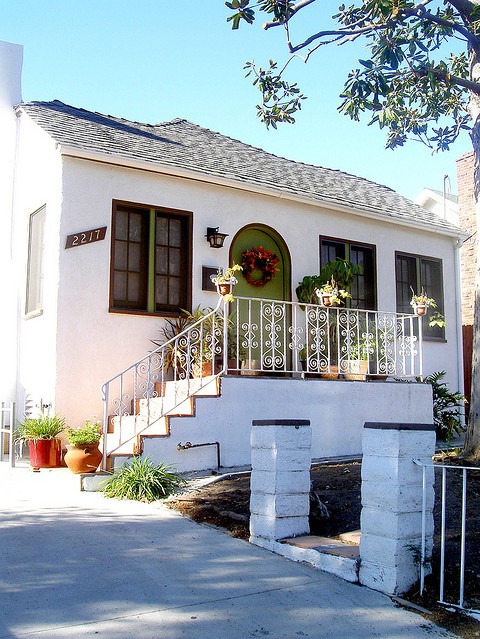
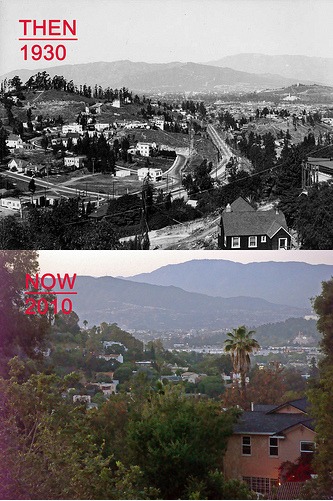
 Durk Dehner has lived in Echo Park for 30 years. For most of that time he’s inhabited a gorgeous 100-year-old craftsman house that sits high up on Laveta Terrace, and is filled to the rafters with dirty drawings. Important dirty drawings. Dirty drawings worthy of preservation and display.
The Tom of Finland Foundation was established in 1984 by Dehner, the creator of these drawings being Touko Laaksonen a.k.a. Tom of Finland. Over the years the foundation’s mission has expanded from preserving and protecting Tom’s art to promoting erotic art in general. Today, its goal is “to offer a safe haven for all erotic art in response to rampant discrimination against art that portray[s] sexual behavior” and to educate “the public as to the cultural merits of erotic art.”
When I went to visit the Tom of Finland Foundation at 1421 Laveta Terrace last Thursday, I half expected this serious attitude toward Tom’s art to be manifested physically in the form of older men in suits showing me around white-washed galleries hung with pictures of men getting it on. What I found instead is what Vice President of the foundation Sharp calls “a living museum.” This is Dehner and Sharp’s home. They live here, along with a rotating group of other foundation members and volunteers, surrounded by Tom’s work and other erotic art that he has inspired. A room at the back of the house serves as both a dining area and a small store where one can purchase items such as Tom of Finland’s sketches and Tom of Finland action figures (featuring two interchangeable phalluses!). Decades-old cracks in the wall have been covered in custom-made erotic drawings that resemble frescoes. Their toilet (her name is Gloria) has been featured in art shows.
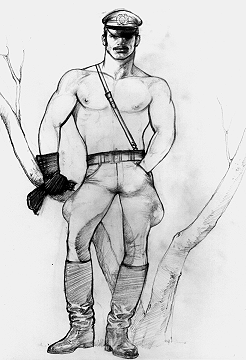
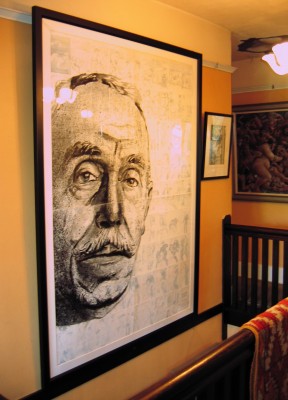 This serious appreciation for the art itself but casual and relaxed attitude towards its subject matter is reflective of Tom of Finland’s work and one of the reasons why it is so important. Tom created fun, light-hearted images of strong, muscular gay men in a time when homosexuals were generally considered to be weak, sad and probably suffering from a psychological disorder. Beginning in 1957, Tom’s work was featured prominently in “beefcake” magazines such as Physique Pictorial. His work gained an underground following over the years, and in the early 1970s, he quite his job at an advertising firm to focus on his drawings.
Tom re-appropriate a number of traditionally heterosexual male archetypes for use in homo-erotic imagery. His art featured policemen, sailors, bikers and lumberjacks as proud gay men. These images inspired an underground movement in gayculture that surfaced in the 1970s and influenced mainstream culture. Without Tom we would not have leathermen, The Village People or Freddy Mercury’s mustache.
Tom’s art helped to change the way that gay men saw themselves. As Dehner states, “I discovered through his work that I was as much of a man as any of my heterosexual counterparts.” Dehner was Tom’s business partner, friend and occasional muse. Beginning in the early 1980s (after his partner of 28 years passed away) Tom would spend half the year in Helsinki and half the year living in the house on Laveta Terrace. He passed away in 1991 at the age of 71.
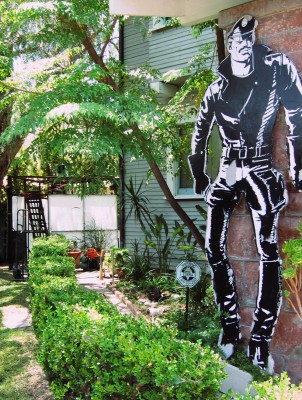 Today, the Tom of Finland Foundation is hard at work cataloging its rather large collection of erotic media. This includes a whole library of books on erotic art and gay culture that may just turn out to be an invaluable resource based on its size and the rarity of some of the literature. The foundation raises money by hosting events and collecting royalties from Tom’s artwork, which will soon be on display for a year in Finland.
Last year Taschen released a 700-page, 15 pound book featuring almost 1,000 of Tom’ drawings. But the guys at the Tom of Finland Foundation seem most proud of the Emerging Erotic Artist Contest that they host. When I talked about it with Sharp, he created an image that sticks in my mind. There are many young gay artists throughout the world whose thoughts and desires are either unacceptable or outright illegal. The Tom of Finland Foundation exists to offer acceptance to these artists and their creations.
To learn more about the Tom of Finland Foundation, click here.
To buy stuff, click here, scroll down and click on the “Tom The Store” icon. PLEASE PAY ATTENTION TO THE FINE PRINT AT THE PORTAL. I do not want anyone having a heart attack on my watch.
The foundation welcomes anyone who would like to come visit and take a tour of the house. The best way to reach them is to give them a call at (213) 250-1685.